Some tasks are so small that they hardly feel worth planning. Replying to a quick message, putting a dish in the dishwasher, filing a single document. Yet when dozens of them pile up, they can make a day feel cluttered and heavy. The two-minute rule is a simple idea for keeping that pile from growing.
Where the idea comes from
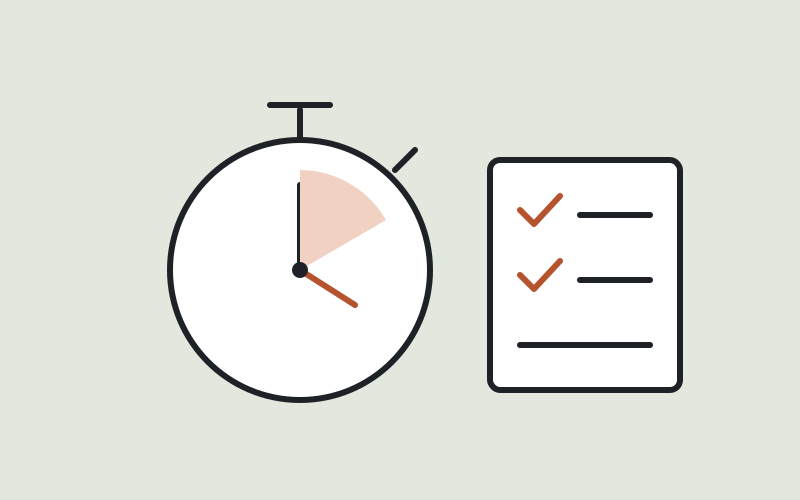
The rule is best known from Getting Things Done, the productivity method popularized by author David Allen. In its original form it is straightforward: if a task will take less than about two minutes, do it right away instead of writing it down or saving it for later.
The logic is practical. Recording a tiny task, remembering it, and coming back to it can easily take more effort than simply finishing it in the moment.
What it looks like in a normal day
- You open a letter and it only needs to be filed. You file it now.
- A colleague asks a yes-or-no question. You answer before moving on.
- You finish your coffee. The mug goes straight into the sink or dishwasher.
- Your shoes come off at the door. They go onto the rack instead of the floor.
None of these moments is impressive on its own. Together, they keep small loose ends from turning into a backlog.
A second version: starting habits
Writer James Clear later described a related idea in his book Atomic Habits. In this version, the rule is about beginning: when you want to start a new habit, shrink it down to something that takes two minutes or less. Instead of "read more," the starting point becomes "read one page." Instead of "tidy the house," it becomes "clear one shelf."
The aim is not to stop at two minutes forever. It is to make starting so easy that you actually do it, and to let the habit grow from there.
When not to use it
The rule is a tool, not a law. If you are in the middle of focused work, stopping for every two-minute task can scatter your attention. Many people handle this by setting aside a short block of time to clear quick tasks in one batch. It also helps to be honest about the estimate. A "quick" task that really takes fifteen minutes belongs on a list, not in the gap between other things.
Trying it out
A simple experiment is to use the rule for a single afternoon and notice what changes. Does your desk look different by the end of the day? Do fewer small reminders linger in your head? For many people, the biggest benefit is not the time saved but the feeling of having fewer unfinished things waiting in the background.